



Unusual Movement in Your Attic or Walls? We Handle it the Right Way – PERMANENTLY.

Roof & Vent Repairs in Houston After Wildlife Damage

Roof & Vent Repairs in Houston After Wildlife Damage

Wildlife doesn’t hesitate. Raccoons rip up shingles, squirrels chew through vent covers, and rats squeeze through gaps you never noticed. Once inside, they shred insulation, gnaw wires, and turn your attic into a breeding ground. Sealing every entry point is the only way to break this cycle for good, especially for homes throughout Houston where wildlife pressure is high.

Roof & Vent Repairs After Wildlife Damage in Houston

Roof vents offer easy access. Designed for airflow, not defense, they become weak spots when covers loosen or seals crack. Animals push through, settle in, and by the time you hear scratching overhead, the attic’s already compromised. The damage isn’t just cosmetic. It spreads quickly and quietly.

How We Block Wildlife From Getting In

Animals don’t need much space to invade. Raccoons pry at weak spots, squirrels chew through wood and plastic, and rats slip through holes barely bigger than a coin. Roof vents, ridge caps, and soffit gaps often get missed during routine checks, making them prime targets. Once one animal finds a way in, others follow the same trail, and the problem multiplies.

From the street, a missing shingle or bent vent cover might seem minor, but these small flaws open the door for wildlife. After storms, roofs take a beating and new gaps appear. Animals move in fast, and they don’t leave on their own. That’s why we look for every possible entry, not just the obvious ones.

What We Find During Roof Inspections

  • Torn or Missing Shingles: Raccoons and squirrels pull up loose shingles to reach the attic, especially after heavy weather.
  • Chewed Vent Covers: Rodents target plastic and aluminum covers, gnawing through to get inside.
  • Cracked or Loose Flashing: Gaps around chimneys and vents let smaller animals slip in without being seen.
  • Damaged Soffit or Fascia: Rot or storm damage creates quick access points for wildlife looking for shelter.
  • Holes Around Pipes or Wiring: Utility penetrations often have gaps left from poor installation, giving animals another way in.

Leaving these spots open guarantees more animals and bigger repair bills. We patch holes, replace damaged vents, and reinforce every weak area. Our repairs don’t just cover the damage. They stop animals from coming back.

How We Repair Entry Points for Good

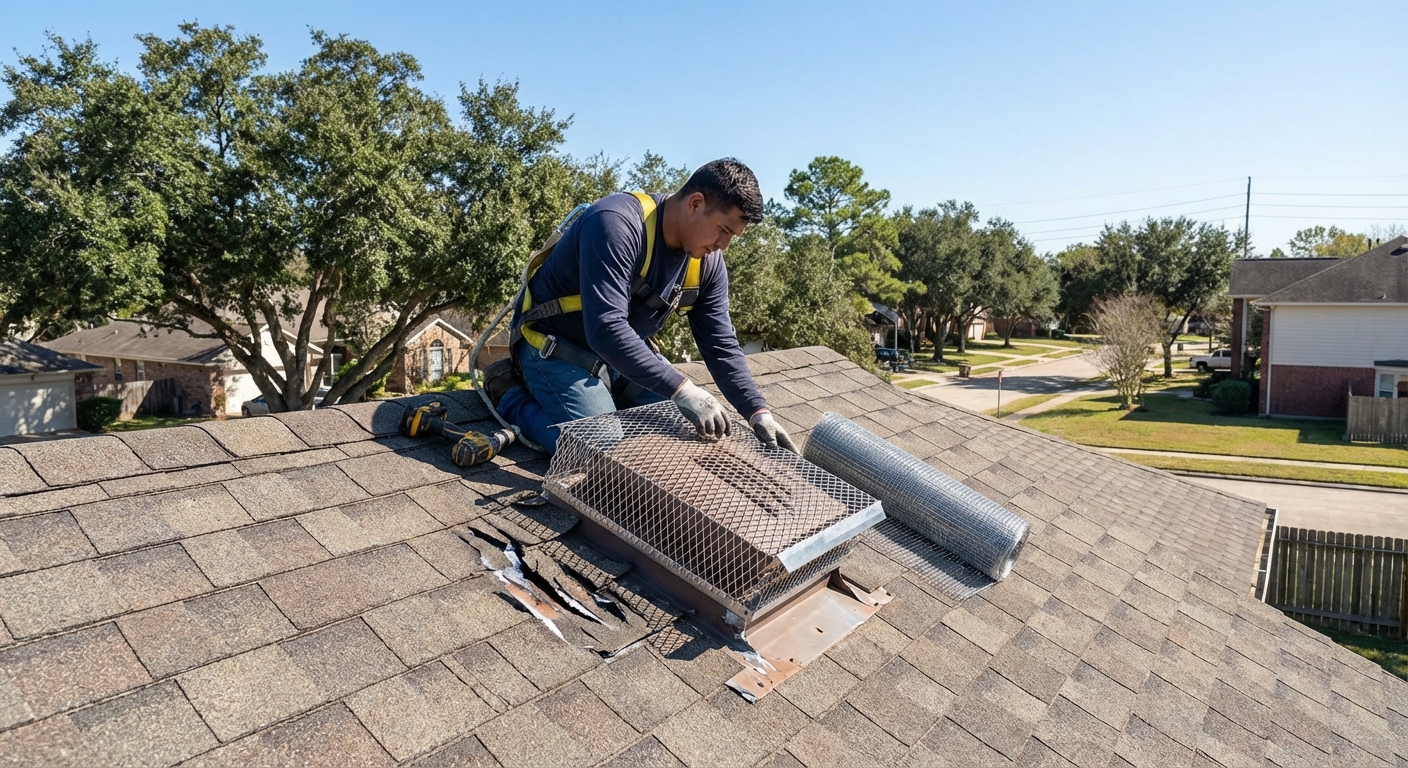
When we fix a roof, we don’t just patch holes. Every entry gets sealed with materials animals can’t chew, claw, or pry open. Heavy-gauge steel mesh, reinforced flashing, and weatherproof sealants hold up through Houston’s storms and heat. We remove damaged vent covers, inspect the ductwork, and clean out any nests before sealing everything tight. New covers go on with secure fasteners and sealed edges, so nothing pushes through again.

We also check for secondary damage. Animals rarely stop at one spot. They test multiple areas. A full inspection catches every weak point before it turns into another problem. In neighborhoods like Bellaire, The Heights, and Katy, we often find several compromised areas after a single intrusion. Our approach covers the entire roof, not just the first hole we see.

How We Reinforce and Seal Roof Vents

  • Vent Cover Replacement: We swap out old or damaged covers for heavy-duty models that resist chewing and prying.
  • Steel Mesh Reinforcement: Mesh goes behind vent openings to block animals while keeping airflow steady.
  • Weatherproof Sealing: Every edge and seam gets sealed with materials that won’t crack or peel, even in harsh weather.
  • Secure Fastening: We bolt or screw covers down so animals can’t lift or shift them loose.
  • Inspection of Surrounding Areas: We check nearby shingles, flashing, and soffits for hidden damage or weak spots that could become the next entry point.

Our vent repairs do more than keep animals out. They protect your attic from moisture, heat, and energy loss. We use materials built to last, so you’re not calling us again in a few months for the same issue.

How We Prevent Future Wildlife Intrusions

When repairs are finished, we focus on prevention. Animals keep testing for weak spots, especially if they’ve nested before. We check every potential entry and make sure nothing’s left exposed. Trimming tree branches away from the roofline cuts off easy access for squirrels and raccoons. Clean gutters prevent water damage that weakens wood and opens new gaps. Regular inspections catch small issues before they turn into big repairs. Homes near wooded areas or parks see more wildlife, so staying ahead is important in the Houston area.

Our exclusion work covers more than just the roof. Attic vents, gable vents, and crawl space openings all get secured. Animals don’t stick to one method. If the roof is sealed but the soffit isn’t, they’ll find another way. We build a complete barrier, so your home stays protected all year.

How We Restore Your Home After Wildlife Damage

After animals get inside, the mess goes beyond the roof. Insulation gets shredded, wiring gets chewed, and droppings create health risks. We handle attic cleanup and sanitation, removing damaged insulation and treating contaminated areas. Our goal is to restore your attic to a safe, clean state and make sure animals can’t return.

Roof and vent repairs are just one part of the solution. We also seal siding gaps, reinforce crawl space vents, and check for ground-level entry points. Whether it’s raccoons in the attic, squirrels in the vents, or rats in the soffit, we seal, reinforce, and maintain every vulnerable spot.


Let's Get Your Roof Sealed and Protected

Roof damage doesn't wait, and neither should you. Call CritterProof at 832-834-8206 or schedule a free inspection to get your roof repaired and your home protected.

Get Your Free Wildlife Inspection in Houston Today

If you're hearing noises, scratching, seeing damage, or suspect wildlife in your attic or walls, don't wait. We offer fast, honest inspections with real solutions that fix the problem.