



Unusual Movement in Your Attic or Walls? We Handle it the Right Way – PERMANENTLY.

Wildlife Removal Services in Cypress, TX

Wildlife Removal Services in Cypress, TX

Wildlife removal in Cypress isn't just about getting critters out—it's about protecting your family, your property, and your peace of mind from the damage and health risks that come with unwanted animals. From raccoons tearing through attic insulation to rodents chewing electrical wiring, the consequences of delayed action can escalate quickly in neighborhoods near Towne Lake and Bridgeland. What starts as strange noises in the ceiling or droppings in the garage can turn into costly repairs and potential safety hazards if left unaddressed. That's where professional wildlife exclusion services in Cypress make all the difference, combining humane removal techniques with long-term prevention strategies that keep animals out for good. Homeowners across the area are discovering that effective wildlife control isn't about quick fixes—it's about understanding animal behavior, sealing entry points properly, and ensuring your home stays protected year-round.

Schedule a Free inspection

Wildlife Removal Services in Cypress, TX

Cypress sits in a unique position where suburban development meets natural habitats, creating perfect conditions for wildlife encounters. Properties near the Cypress Creek Greenway or tucked into wooded subdivisions off Highway 290 often see increased activity from raccoons, squirrels, and bats seeking shelter during extreme weather. Spring brings nesting season, fall triggers foraging behavior, and winter sends animals searching for warm places to den. Understanding these patterns helps explain why attic animal removal in Cypress spikes during certain months and why preventive measures work best when timed correctly. The homes here—many built within the last two decades—feature construction details that unintentionally invite wildlife, from uncapped chimneys to unsealed roof vents and crawl space gaps that look like welcome mats to determined critters.

What makes wildlife removal effective in this area isn't just the initial extraction but the comprehensive approach that follows. Cypress raccoon removal experts know that pulling an animal out without addressing how it got in simply invites the next one to move in. True protection requires inspection of every potential entry point, from fascia boards to foundation cracks, followed by professional-grade exclusion materials that stand up to Houston's humidity and temperature swings. Rodent removal in Cypress homes demands similar attention to detail, since mice and rats can squeeze through openings the size of a quarter and reproduce at alarming rates once they establish a colony. The goal isn't just eviction—it's creating a barrier that makes your home completely inaccessible to future invaders while restoring the damage left behind.

Why Cypress Properties Face Persistent Wildlife Challenges

The rapid growth of Cypress over the past fifteen years has pushed residential neighborhoods deeper into areas that were recently undeveloped land, displacing native wildlife populations that now adapt by moving into attics, crawl spaces, and chimneys. Subdivisions near Barker Cypress and the Grand Parkway expansion zones experience particularly high rates of wildlife activity because construction disrupts established animal territories, forcing raccoons, opossums, and squirrels to seek new shelter. These aren't temporary visitors passing through—they're animals looking for permanent homes that offer food, water, and protection from predators. Once they discover that your attic provides all three, along with insulation perfect for nesting, they'll return year after year unless proper exclusion measures are installed. The problem compounds when homeowners attempt DIY solutions that address symptoms without solving the root cause, leaving entry points open and damage unrepaired.

Local wildlife has also grown increasingly bold as they acclimate to human presence, learning that neighborhoods offer easier food sources than natural habitats. Trash cans, pet food left outside, bird feeders, and even vegetable gardens become attractants that draw animals closer to homes. From there, it's a short journey to discovering vulnerable points in your roofline or foundation. Here's what makes Cypress properties particularly susceptible:

  • Mature trees that overhang roofs create natural highways for squirrels and raccoons to access vulnerable entry points
  • Proximity to greenbelt areas and retention ponds increases the likelihood of encounters with opossums, rats, and snakes
  • Architectural features common in newer construction—decorative vents, complex rooflines, and spacious attics—provide ideal nesting environments
  • Seasonal flooding and heavy rains drive ground-dwelling animals to seek elevated shelter in homes and garages

Understanding these factors helps explain why reactive approaches fall short and why prevention-focused strategies deliver better long-term results. When a raccoon discovers your attic offers protection from summer heat and winter cold, it doesn't just take up residence—it often brings its young, creating a multi-generational problem that grows more complex over time. The sooner you address vulnerabilities in your home's exterior, the less likely you are to face the health risks and structural damage that come with prolonged wildlife occupation. Professional assessment identifies weak points you might not notice from ground level, from deteriorating roof edges to gaps around utility lines that provide easy access.

Recognizing the Real Risks Behind Wildlife Intrusions

Beyond the unsettling experience of hearing scratching sounds overhead at night, wildlife intrusions carry genuine health and safety concerns that many homeowners underestimate until damage becomes visible. Raccoon feces can harbor roundworm eggs that remain infectious for years, posing serious risks to children and pets who come into contact with contaminated insulation or attic spaces. Rodents gnaw constantly to keep their teeth from overgrowing, often targeting electrical wiring and creating fire hazards that insurance companies take very seriously. Bats, while beneficial for insect control outdoors, can transmit rabies and histoplasmosis through their droppings, making attic cleanups potentially dangerous without proper protective equipment. These aren't scare tactics—they're documented risks that justify professional intervention rather than attempting removal yourself.

Structural damage accumulates faster than most people realize once animals establish residence. Squirrels can chew through wooden beams and roof sheathing, creating entry points that allow water intrusion during heavy storms common in the Cypress area. Raccoons tear apart insulation to create nesting materials, significantly reducing your home's energy efficiency and driving up utility costs. The combination of urine, feces, and nesting debris creates conditions where mold and bacteria thrive, contaminating the air that circulates through your HVAC system and throughout your living spaces. Rodent removal in Cypress homes often reveals extensive damage to stored items, holiday decorations, and even the paper backing on insulation that rodents shred for bedding. The longer animals occupy your space, the more invasive and expensive the restoration process becomes, which is why early intervention saves both money and stress.

Smart Prevention Beats Costly Repairs Every Time

The most effective wildlife strategy isn't about what you do after discovering an intruder—it's about making your property unappealing and inaccessible before animals even try to move in. Wildlife exclusion services in Cypress focus on hardening your home against entry by addressing the specific vulnerabilities that local species exploit most frequently. This means inspecting and reinforcing areas like roof-to-wall junctions, soffit intersections, chimney caps, and foundation vents with materials designed to withstand determined efforts to breach them. Professional-grade exclusion uses heavy-gauge steel mesh, specialized one-way doors that allow animals to exit but not return, and sealants that won't crack or deteriorate under Texas sun and humidity. It's an investment that pays dividends by eliminating the recurring expense of repeated removals and repairs.

Timing matters significantly when implementing preventive measures. Late summer and early fall represent ideal windows for exclusion work since most young animals have matured enough to leave nests but haven't yet established winter dens. Spring exclusion requires careful inspection to ensure you're not accidentally sealing in dependent young, which creates both ethical concerns and legal complications under wildlife protection statutes. Weather conditions also play a role—performing exterior work during Cypress's dry months ensures proper adhesion of sealants and allows thorough inspection of areas that might be obscured during wetter seasons. Experienced professionals understand these timing nuances and schedule work to maximize effectiveness while minimizing risks.

Here's what comprehensive prevention typically involves:

  • Detailed inspection of all potential entry points from ground level to roofline, including areas obscured by landscaping or architectural features
  • Installation of chimney caps, vent covers, and ridge guard systems that maintain proper ventilation while blocking animal access
  • Trim-back recommendations for tree branches that provide wildlife pathways to your roof structure
  • Habitat modification advice to reduce attractants like accessible food sources and convenient water supplies

These measures work together to create multiple layers of defense that address both access points and the reasons animals target your property in the first place. You might have the most secure roof in Cypress, but if your yard offers easy meals and your neighbors have similar vulnerabilities, animals will continue testing your defenses. That's why effective prevention often includes neighborhood-level awareness, helping surrounding properties understand how their wildlife management practices affect everyone else. When communities near Telge Road or along the Fry Road corridor adopt similar prevention strategies, wildlife activity decreases across entire subdivisions rather than just shifting problems from one home to another.

What Professional Wildlife Removal Actually Involves

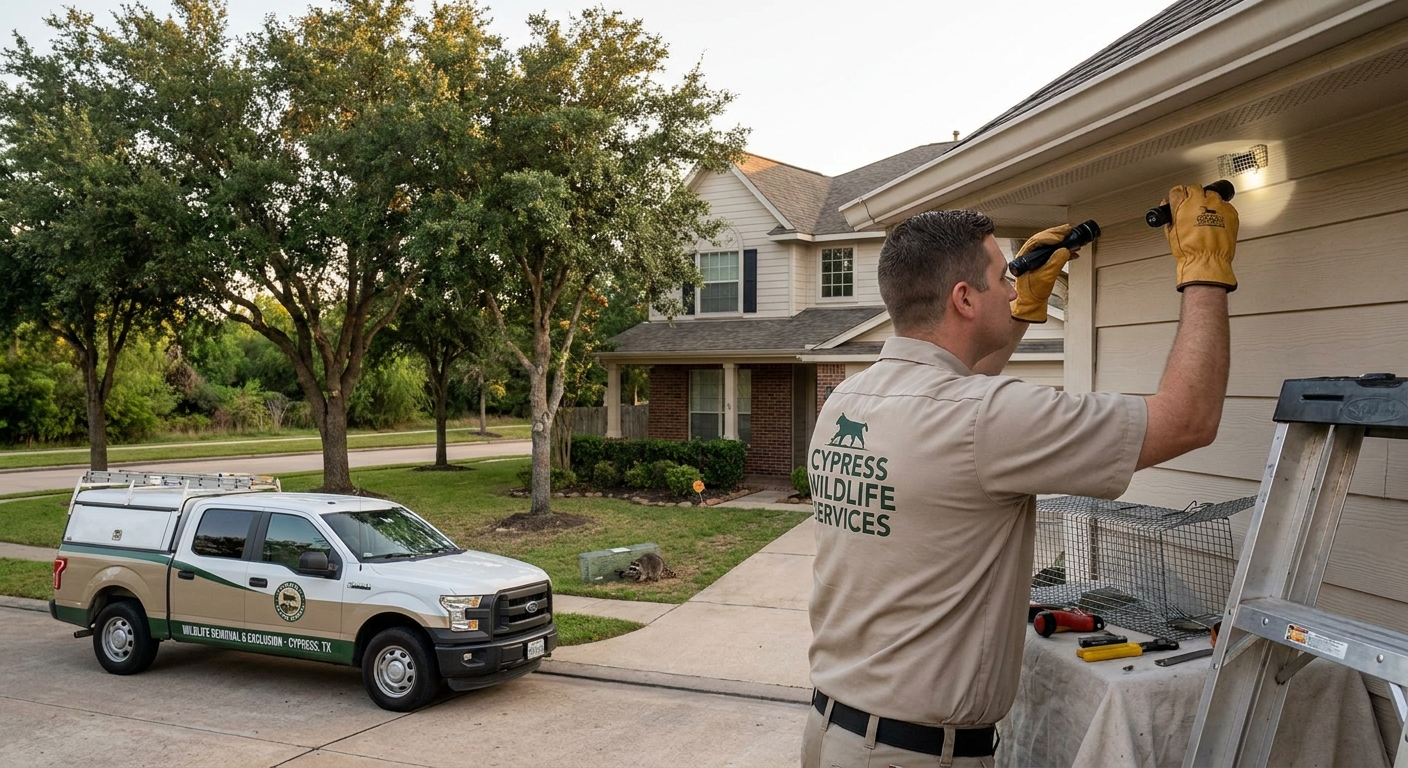
Effective wildlife removal goes far beyond setting a trap and hoping for the best—it requires species-specific knowledge, humane handling techniques, and comprehensive follow-through that addresses both the immediate problem and underlying vulnerabilities. When we respond to calls for attic animal removal in Cypress, the process begins with thorough investigation to identify exactly what species you're dealing with, how many animals are present, and whether dependent young are involved. Different animals require different approaches: raccoons need sturdy containment and careful handling due to their strength and defensive behavior, while bat removal must comply with seasonal restrictions that protect maternity colonies. Squirrels often work in pairs, so removing one without addressing the other leaves your problem half-solved. This diagnostic phase informs everything that follows, from equipment selection to timing of removal efforts.

The actual extraction process prioritizes animal welfare while ensuring complete removal from your property. One-way exclusion doors allow animals to exit during their normal activity periods but prevent re-entry, encouraging them to relocate naturally without the stress of direct capture. For situations requiring hands-on removal—like raccoon families in inaccessible spaces or aggressive animals posing immediate threats—proper protective equipment and handling protocols keep both technicians and animals safe. State regulations govern how removed wildlife can be relocated, with many species requiring release within specific distance parameters to prevent disruption of established populations. Understanding and following these legal requirements separates legitimate professional services from well-meaning but potentially illegal DIY efforts or unlicensed operators.

Once animals are removed, the real work of restoration and prevention begins. Contaminated insulation must be safely removed and disposed of according to environmental regulations, with replacement materials installed to restore your home's energy efficiency. Damaged structural components need repair to prevent water intrusion and maintain building integrity. Entry points require sealing with appropriate materials—not just whatever's handy in the garage—to withstand future attempts at intrusion. This restoration phase often reveals secondary problems like hidden water damage or electrical issues that the wildlife activity either caused or exposed. Addressing these comprehensively prevents bigger problems down the road and ensures your home returns to full functionality rather than just being slightly less invaded than before.

Find Us Locally in the Cypress Area

We proudly serve the entire Cypress area, from established neighborhoods near Fairfield to newer developments along the Grand Parkway corridor. Use the map below to see exactly where we're located and how we can help with your wildlife removal needs throughout northwest Houston.

Questions Cypress Homeowners Ask Before Calling for Help

How quickly can you respond to wildlife emergencies in Cypress neighborhoods?
Response times vary based on current service demand, but we prioritize emergency situations involving health risks or significant property damage. Most Cypress service calls receive same-day or next-day response, with scheduling flexibility to accommodate your availability. Situations involving bats, aggressive raccoons, or animals in living spaces get expedited attention since they pose immediate concerns. When you call, we'll assess your specific situation and provide realistic timeframes rather than vague promises, ensuring you know exactly when help will arrive.

What's the difference between removal and exclusion, and do I need both?
Removal addresses the immediate problem by extracting animals currently occupying your property, while exclusion prevents future intrusions by sealing entry points and eliminating access. Most effective solutions combine both approaches—removing current residents, then securing your home so others can't move in. Exclusion-only services work well for properties showing signs of attempted entry but no active occupation, serving as preventive measures before problems develop. Removal without exclusion simply opens your property to the next animal looking for shelter, which is why comprehensive service packages deliver better long-term value.

Will wildlife removal services in Cypress require us to leave our home during treatment?
Most wildlife removal and exclusion work happens in exterior areas, attics, or crawl spaces without disrupting normal household activities. You typically don't need to vacate during standard service calls, though we'll recommend keeping pets and children away from active work zones for their safety. Extensive attic restoration involving contaminated insulation removal might require temporary relocation if your HVAC system could distribute particles through living spaces, but we'll discuss these situations in advance and help you plan accordingly. Our goal is minimizing disruption while ensuring thorough, safe completion of all necessary work.

Protecting Your Cypress Home for the Long Term

Long-term wildlife control isn't about periodic emergency interventions—it's about creating conditions where your property simply isn't an attractive or accessible option for animals seeking shelter. This mindset shift from reactive to proactive management saves significant money over the years while protecting your home's value and your family's health. Regular seasonal inspections catch minor vulnerabilities before they become major access points, much like routine car maintenance prevents breakdowns. Properties throughout Cypress benefit from this approach, particularly those backing to greenbelt areas or situated near the numerous retention ponds and water features that attract wildlife. By investing in professional exclusion and maintaining those barriers over time, you break the cycle of repeated intrusions that plague homeowners who rely on temporary fixes.

Education plays a crucial role in sustained success. Understanding what attracts wildlife—from unsealed trash cans to accessible pet food—empowers you to modify habits that inadvertently invite problems. Knowing what signs indicate early-stage intrusions helps you catch issues while they're still manageable rather than waiting until damage becomes obvious. Seasonal awareness of when different species are most active allows you to schedule preventive measures at optimal times. We provide this guidance as part of our service, sharing the knowledge that helps Cypress homeowners become active participants in protecting their properties rather than passive victims of wildlife invasions. When you understand the why behind our recommendations, you're better equipped to maintain the protections we install and recognize when professional reassessment is needed.

Your home represents one of your largest investments, and protecting it from wildlife damage preserves both its structural integrity and its market value. Prospective buyers increasingly request documentation of wildlife exclusion work during home inspections, recognizing that proper prevention adds real value to a property. CritterProof combines humane removal techniques with industry-leading exclusion methods that give Cypress homeowners lasting peace of mind. Ready to protect your property the right way? Schedule your inspection or call 832-834-8206 to reach out to us.

Schedule a Free inspection

Get Your Free Wildlife Inspection in Houston Today

If you're hearing noises, scratching, seeing damage, or suspect wildlife in your attic or walls, don't wait. We offer fast, honest inspections with real solutions that fix the problem.