



Unusual Movement in Your Attic or Walls? We Handle it the Right Way – PERMANENTLY.

Wildlife Removal Tips & Info | Houston

Noises in Walls Animal? What It Usually Means

Published March 19th, 2026 by CritterProof Wildlife Removal

You hear scratching behind the drywall at 2 a.m., then silence, then a fast burst of movement over the bedroom wall. When homeowners search for a noises in walls animal problem, they are usually trying to answer one urgent question: what is in my house, and how bad is it going to get?

The short answer is this: if you can hear an animal in the wall, it is already past the point of being a minor issue. Animals inside wall voids do not stay contained for long. They chew, nest, leave waste, damage insulation, and keep looking for better access to attics, crawl spaces, and living areas. The right response is not guessing for a week and hoping it goes away. The right response is to identify the animal, remove it humanely, and seal the home so it cannot come back.

What a noises in walls animal problem usually sounds like

Different animals make different sounds, but there is overlap. That is why homeowners often mistake rats for squirrels, or a raccoon for something much smaller. Timing, volume, and movement patterns usually tell you more than the noise alone.

If you hear light scratching, quick scurrying, and occasional gnawing at night, rats are high on the list. Roof rats are especially common around homes and are good climbers, which means they often enter through the roofline and move down into wall spaces. Norway rats are heavier and more often associated with lower areas, but either can end up in walls.

If the noise is heavier, with thumping, dragging, or strong movement that sounds too loud to be a rat, you may be dealing with a raccoon or opossum. Raccoons, in particular, can do serious damage fast. They tear into weak areas, crush insulation, and create contamination issues that go well beyond the noise itself.

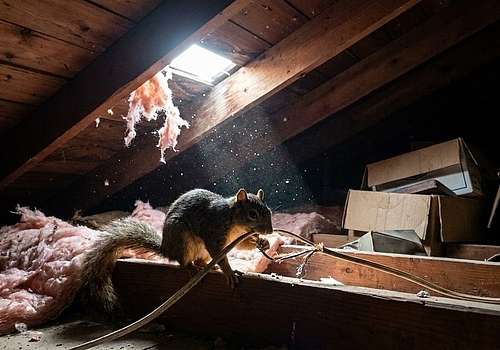
If the sound happens mostly in the early morning or near sunset, and it feels fast and restless, squirrels are a likely suspect. Squirrels commonly enter attics first, then move into walls while nesting or exploring. They also chew aggressively, which creates fire risk if wiring is involved.

There are cases where the sound is not an animal at all. Loose ductwork, expanding pipes, and HVAC movement can all create noises in walls. But those sounds tend to be more mechanical and repeat in a pattern. Animal noise usually sounds irregular, alive, and purposeful.

The most common animals in walls around Houston homes

In the Houston area, wall noise is rarely random. It usually traces back to a few repeat offenders.

Rats

Rats are one of the most common causes of noises in walls animal calls. They enter through surprisingly small gaps and often stay hidden until the sound becomes impossible to ignore. The bigger issue is not just the movement. Rats contaminate areas with droppings and urine, chew wood and wiring, and reproduce quickly.

Squirrels

Squirrels are active, destructive, and persistent. They often enter near roof returns, vents, fascia gaps, and soffits. Once inside, they may build nests in insulation and use wall cavities as travel routes. If young are present, the sounds may increase as the nest develops.

Raccoons

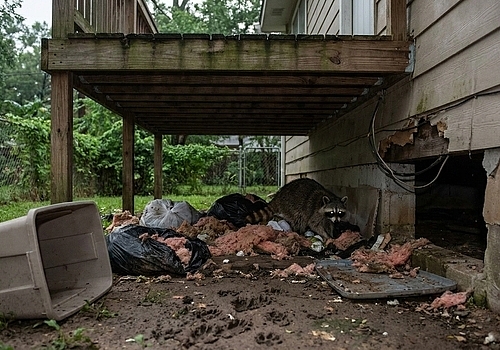
Raccoons are less subtle. If one gets into the wall or a connected attic area, the noise is often loud enough to wake the house. Female raccoons also look for protected spaces to raise babies, which changes how removal should be handled. This is one reason a quick trap-and-go approach often creates a bigger problem.

Opossums and other wildlife

Opossums can enter homes through damaged vents or weak exterior openings, though they are less common in tight wall spaces than rats or squirrels. Other wildlife may occasionally end up in wall voids, but in most residential calls, the pattern points back to rats, squirrels, or raccoons.

Why animals end up inside wall voids

Animals do not get into walls by accident. They get in because the home gives them a usable opening and a protected route.

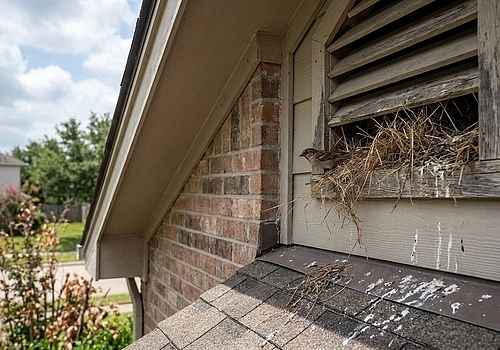
In many cases, the actual entry point is not on the wall where you hear the sound. The access may be near the roofline, under the eaves, at a construction gap, around utility penetrations, or through damaged vent covers. Once inside, the wall cavity becomes a hidden travel lane. That is why one of the biggest mistakes homeowners make is focusing only on the noise location instead of the full path the animal is using.

This is also why temporary trapping often fails. You may remove one animal and still leave the entry point open. If that happens, the next animal uses the same route.

Why waiting makes the problem more expensive

A noises in walls animal issue rarely stays the same from one week to the next. It usually gets worse.

Rats multiply. Squirrels keep chewing. Raccoons expand damage quickly because of their size and strength. Even if the animal leaves on its own, the contamination and structural vulnerability remain. Once urine, droppings, nesting debris, or dead animal odor builds up in a wall or attic, the job is no longer just removal. It becomes a sanitation and repair issue too.

There is also the risk of hidden damage. Homeowners often call after hearing noise for weeks, only to find chewed wiring, stained drywall, ruined insulation, or torn vent screens. The longer the access point stays open, the more likely repeat intrusion becomes.

What not to do when you hear an animal in the wall

The biggest mistake is assuming the noise will stop on its own. The second biggest mistake is trying to force the animal out without understanding what it is.

Poison is a bad idea inside a home structure. It can leave you with dead animals in inaccessible spaces, strong odor, insects, and an unresolved entry problem. Store-bought traps also have limits. They may catch one animal while others remain inside, and they do nothing to solve how the animal got in.

Sealing the opening too early can be just as bad. If young animals are inside, or if the animal is currently using another hidden route, you can trap wildlife in the structure and create more damage, noise, and odor.

How a proper inspection solves the right problem

The goal is not just to confirm there is an animal in the wall. The goal is to identify the species, locate active and secondary entry points, determine whether nesting is involved, and build a permanent plan.

A proper inspection looks at the full structure, especially roofline transitions, attic vents, soffits, flashing gaps, utility penetrations, and lower foundation-level openings when appropriate. It also checks for related damage, contamination, and evidence of travel patterns.

This is the difference between a temporary response and a long-term fix. Humane removal matters, but it only works long term when the structure is secured afterward.

What permanent wildlife control should include

For most homes, the fix has three parts. First, remove the animal or animals safely and humanely. Second, identify and seal every active entry point and likely re-entry point. Third, address any contamination or damaged material left behind.

That process matters because wall-noise calls often involve more than a single animal. A squirrel in the wall may point to attic access. Rats in a wall may mean multiple roofline gaps. A raccoon problem may include torn construction materials that invite the next intruder unless repaired correctly.

At CritterProof Wildlife Removal, that is the focus – fixing the source of the problem so homeowners are not dealing with the same noise again a month later. A written warranty matters because exclusion work should hold up after the animal is gone.

When to call right away

Some situations should move fast. If the noise is loud and sudden, if you hear chewing, if there is a strong odor, if the sound is near a bedroom or living area, or if you have seen droppings, stains, or entry damage outside, it is time to act. The same is true if you suspect young animals are involved.

For Houston-area homeowners, heat, storms, and seasonal wildlife movement can all increase intrusion pressure. Homes do not need to be old or neglected to have this problem. Even well-kept houses can have vulnerable gaps that only become obvious once an animal finds them.

If you are hearing movement in the walls, trust that signal. The noise is the symptom. The real issue is the opening, the nesting activity, and the damage happening where you cannot see it. The sooner that gets inspected and fixed the right way, the easier it is to protect the home and put the nights back to normal.


‹ Back

Get Your Free Wildlife Inspection in Houston Today

If you're hearing noises, scratching, seeing damage, or suspect wildlife in your attic or walls, don't wait. We offer fast, honest inspections with real solutions that fix the problem.