




Unusual Movement in Your Attic or Walls? We Handle it the Right Way – PERMANENTLY.

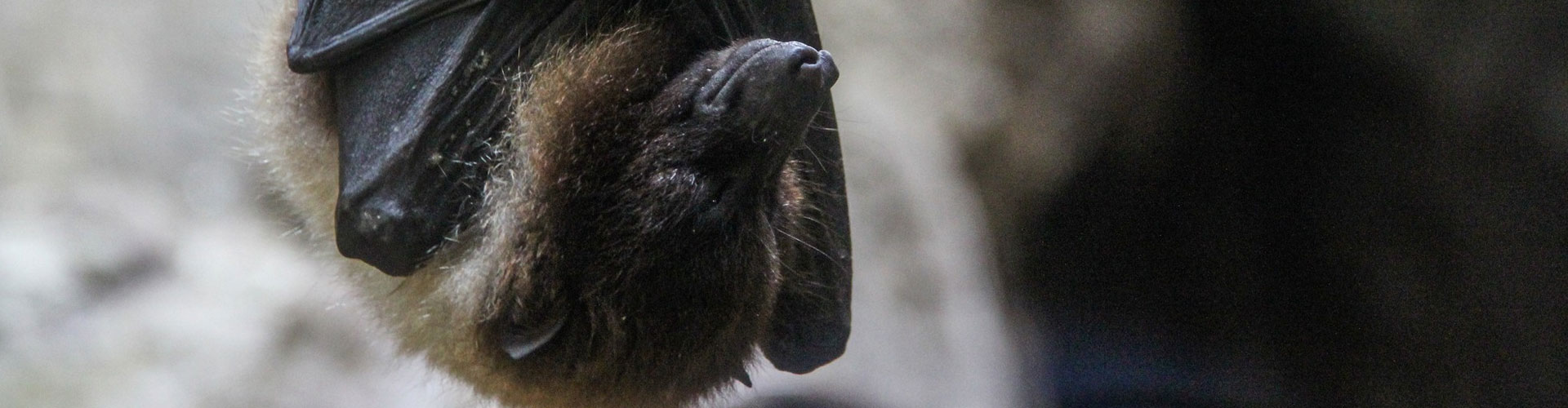
From a tree, a bat is handled by CritterProof through bat removal services.

Signs of a Squirrel Infestation in Your Houston Attic

Published May 14th, 2026 by CritterProof Wildlife Removal

Most Houston homeowners think squirrels are just yard visitors. Cute little acrobats that jump from tree to tree. But when they move into your attic, they're not guests anymore — they're tenants who don't pay rent and trash the place. Squirrels chew through wiring, shred insulation, and leave behind droppings that pile up fast. If you're hearing noises overhead or spotting damage around your roofline, you're not imagining things. You've got a problem that won't fix itself.

Signs of a Squirrel Infestation in Your Houston Attic

Here's what matters. Catching an infestation early means less damage, lower repair costs, and fewer headaches down the line. Wait too long, and you're looking at fire hazards, structural issues, and cleanup bills that sting. Every sign you ignore gives them more time to settle in. Every delay costs you more than it should.

Scratching and Scampering Overhead

The first clue usually comes from above. Squirrels are daytime creatures, so if you're hearing movement in your attic during morning hours or late afternoon, that's not your imagination. The sounds are distinct — scratching, rolling, thumping. Sometimes it's frantic. Other times it's rhythmic, like they're gnawing on something solid. Either way, it's not normal.

Unlike nocturnal pests that move at night, squirrels operate on a schedule that overlaps with yours. That means you'll hear them when you're awake, which makes the problem harder to ignore. If the noise is consistent and happens during daylight, you're dealing with squirrels, not rats or raccoons.

Holes and Gnaw Marks Around the Roofline

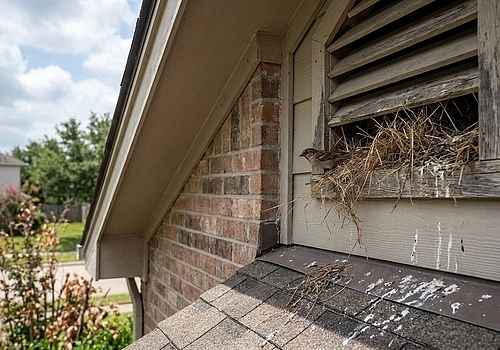
Squirrels don't need much space to get inside. A gap the size of a golf ball is enough. They'll chew through wood, vinyl, and even thin metal to widen an opening. Check your soffits, fascia boards, and roof vents for fresh damage. Look for splintered wood, torn screens, or holes that weren't there before.

Once they're in, they don't stop chewing. Squirrels gnaw constantly to keep their teeth from overgrowing, which means your attic becomes a buffet of beams, insulation, and wiring. The entry point is just the beginning. The real damage happens inside, where you can't see it until it's already done.

Droppings Piled in Corners

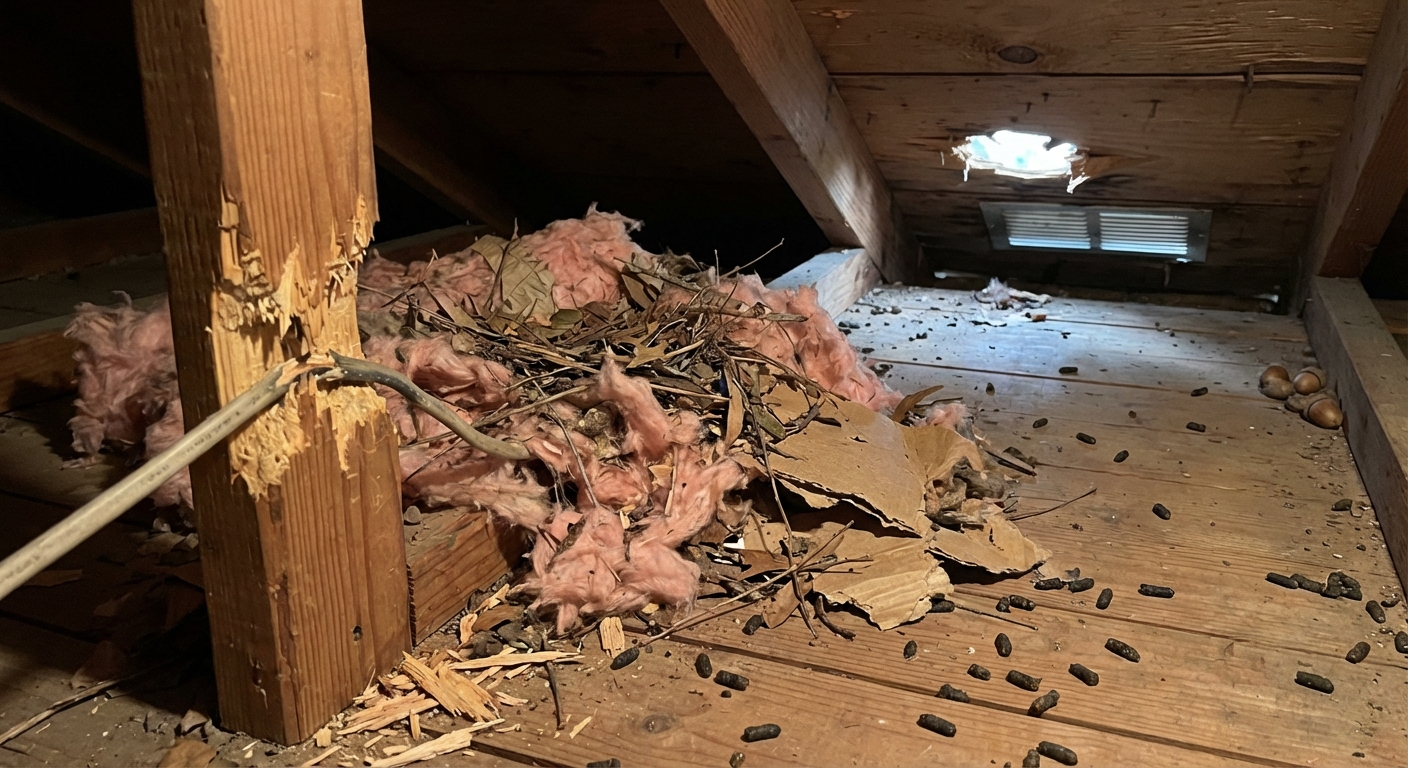
Squirrel droppings are small, dark, and cylindrical. They look similar to rat droppings but tend to be slightly larger and more rounded at the ends. You'll find them clustered in areas where squirrels travel or nest — near insulation, along beams, or in corners where they feel safe.

The smell follows the droppings. It's musty, sharp, and gets worse over time. If your attic smells like urine or has a stale, animal odor, that's not just unpleasant — it's a health risk. Squirrel waste can carry bacteria, parasites, and pathogens that you don't want circulating through your home's ventilation system.

Shredded Insulation and Nesting Debris

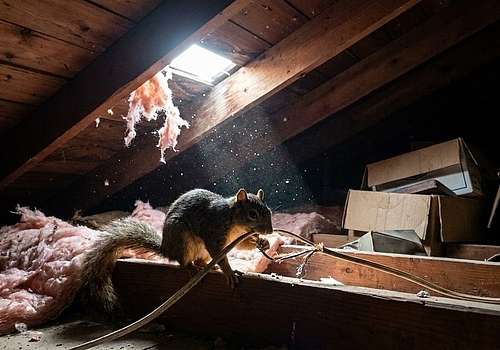
Squirrels build nests using whatever they can find. In your attic, that means insulation, cardboard, fabric, leaves, and twigs. They'll tear apart fiberglass batts, shred paper, and pile it all into a cozy den. These nests are usually tucked into corners, behind HVAC ducts, or near warm spots like chimneys.

If you spot piles of material that don't belong, or if your insulation looks like it's been ripped apart, you've got squirrels. They don't clean up after themselves, and they don't care about your energy bills. Damaged insulation means higher heating and cooling costs, and replacing it isn't cheap.

Chewed Wiring and Fire Hazards

This is where squirrels go from annoying to dangerous. Their teeth never stop growing, so they chew constantly. Electrical wiring is a favorite target because it's accessible and satisfies their gnawing instinct. The problem? Exposed wires can spark, overheat, and start fires.

If you notice flickering lights, tripped breakers, or burnt smells coming from your attic, don't wait. Get an electrician and a wildlife removal specialist involved immediately. Squirrels don't understand the risk they're creating, but you do. And ignoring it could cost you more than just repair bills.

Squirrels Running Along Your Roof

Watch the outside of your house. If you're seeing squirrels on your roof multiple times a day, especially near vents or eaves, they've likely found a way in. Squirrels are creatures of habit. They use the same routes, the same entry points, and the same nesting sites year after year.

Pay attention to tree branches that hang over your roof. Squirrels use them as highways. Trim back any limbs within six feet of your roofline to cut off easy access. It won't solve an existing infestation, but it makes your home less inviting for future invasions.

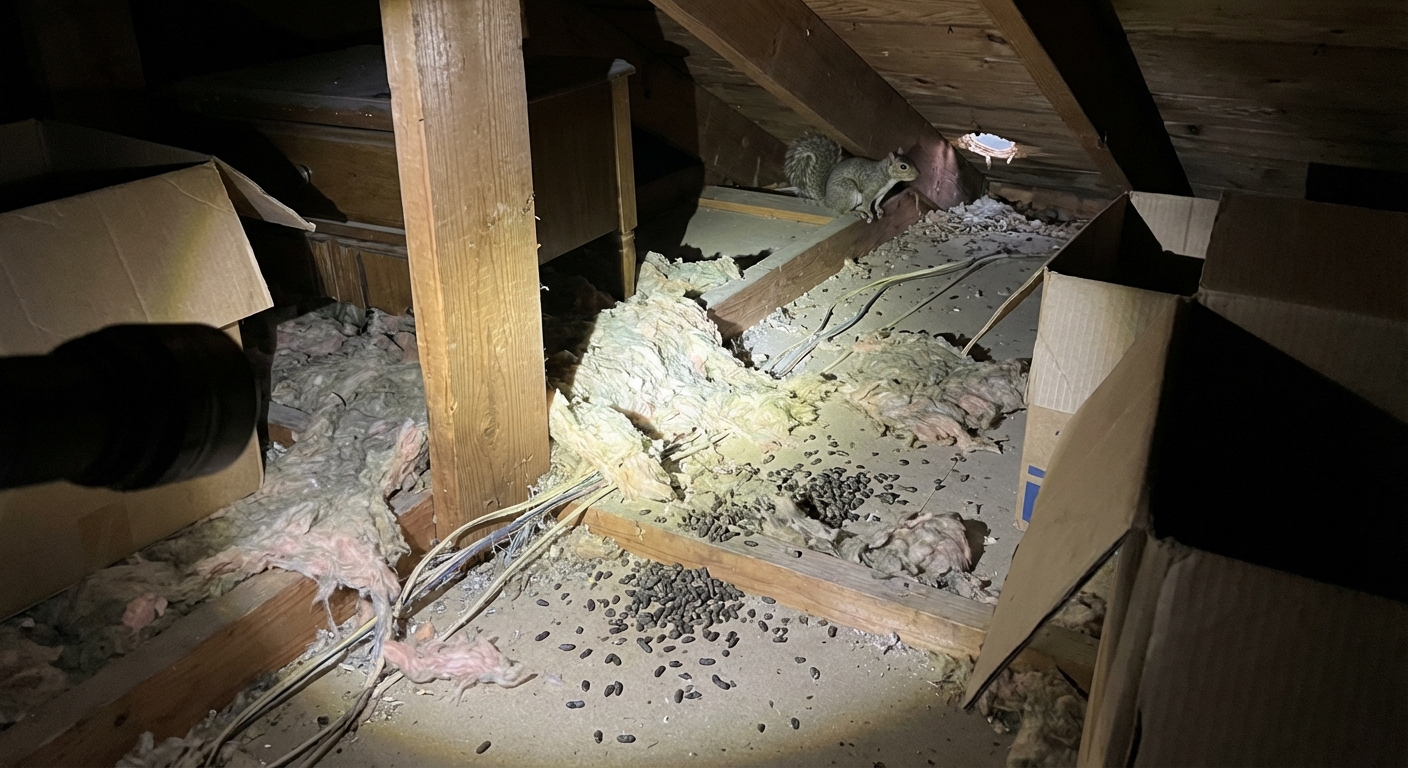
Squirrel running on Houston attic roof, sign of infestation

Stains on Ceilings or Walls

Yellowish or brownish stains on your ceiling are a red flag. They're usually caused by urine soaking through insulation and drywall. Over time, the moisture weakens the structure and creates an environment for mold growth. If you're seeing stains, the infestation has been there long enough to cause serious damage.

Sometimes the stains come with a smell. Other times they're just visible marks that spread slowly. Either way, they're not cosmetic. They're evidence of a problem that's been building for weeks or months, and they won't go away on their own.

What Happens If You Wait

Ignoring a squirrel infestation doesn't make it disappear. It makes it worse. Squirrels breed twice a year, and a single female can have multiple litters. That means more noise, more damage, and more droppings. The longer they stay, the harder and more expensive the cleanup becomes.

You'll also attract secondary pests. Squirrel nests draw fleas, mites, and other parasites. Dead squirrels — because yes, they sometimes get trapped and die in your attic — attract flies and create unbearable odors. What starts as a minor nuisance can spiral into a full-blown disaster if you don't act fast.

Calling in the Professionals

DIY removal is tempting, but it's risky. Squirrels bite when cornered, and they carry diseases. Trapping them without the right permits can land you in legal trouble in some areas. Plus, if you don't seal every entry point, they'll just come back.

A professional squirrel removal service knows how to handle squirrels safely and humanely. They'll inspect your attic, identify entry points, remove the animals, and seal up your home so it doesn't happen again. They'll also help you assess the damage and recommend repairs. It's not cheap, but it's a lot cheaper than replacing your roof or rewiring your house after a fire.

  • Inspect your attic regularly for signs of activity
  • Trim tree branches that overhang your roof
  • Seal gaps and holes before squirrels find them
  • Install vent covers and chimney caps
  • Don't leave food sources like bird feeders near your home

Prevention Beats Cleanup Every Time

Once you've dealt with an infestation, the last thing you want is a repeat. Prevention is straightforward but requires consistency. Walk your roofline every few months. Check for new gaps, loose shingles, or damaged vents. Keep your attic clean and dry. Squirrels prefer cluttered, undisturbed spaces, so regular attic inspections make your home less appealing.

  • Schedule annual attic inspections
  • Replace damaged insulation promptly
  • Monitor for new entry points after storms
  • Keep gutters clear to prevent roof damage
  • Work with a pest control service for ongoing monitoring

Your Attic Isn't a Wildlife Refuge

Squirrels belong in trees, not in your insulation. The moment you suspect they've moved in, the clock starts ticking. Every day you wait gives them more time to chew, nest, and multiply. The damage compounds. The risks grow. And the bill gets bigger.

Houston homeowners who stay ahead of the problem save money and stress. Those who wait end up paying for it — literally. If you're hearing noises, seeing droppings, or spotting damage, don't brush it off. Get it checked. Get it handled. And get your attic back. Professional attic cleanup and sanitation services can restore your space after an infestation, while full home exclusion and entry point sealing ensures squirrels can't return. For comprehensive protection, consider critter-proofing your home to prevent future wildlife invasions.

Let’s Protect Your Home Together

We know how stressful it is to discover squirrels have taken over your attic, but you don’t have to face it alone. Let’s work together to safeguard your home and restore your peace of mind. If you’re ready to stop the damage and keep wildlife out for good, call us at 832-834-8206 or schedule a free inspection today.


‹ Back

Get Your Free Wildlife Inspection in Houston Today

If you're hearing noises, scratching, seeing damage, or suspect wildlife in your attic or walls, don't wait. We offer fast, honest inspections with real solutions that fix the problem.