




Unusual Movement in Your Attic or Walls? We Handle it the Right Way – PERMANENTLY.

From a tree, a bat is handled by CritterProof through bat removal services.

Do You Have Opossums Living Under Your Shed in Houston?

Published September 28th, 2026 by CritterProof Wildlife Removal

Houston homeowners know the drill. You hear something rustling beneath the shed after dark. Maybe you spot a trail of prints near the foundation, or you catch a whiff of something that wasn't there last week. Opossums don't send invitations—they just move in. And once they're settled under your shed, they're not leaving without a push. The question isn't whether opossums are common here. They are. The question is whether you've got one camping out in your backyard right now—and what you're going to do about it.

Do You Have Opossums Living Under Your Houston Shed?

These marsupials don't care about property lines. They care about shelter, shade, and easy access to food. If your shed checks those boxes, you're already on their list. The good news? You can get them out. The bad news? You'll need more than good intentions to make it stick.

Why Your Shed Looks Like Prime Real Estate

Opossums aren't picky, but they're smart. A shed offers everything they need without the drama of digging a burrow or climbing a tree. It's dark, quiet, and undisturbed most of the time. The space underneath stays cooler than the scorching Houston heat, and it's far enough from foot traffic that they can sleep through the day without getting spooked. Add in the fact that most sheds sit near gardens, trash bins, or compost piles, and you've just built them a bed-and-breakfast.

They don't need much of a gap to squeeze through. A small opening under the edge, a loose board, or a crack in the foundation is all it takes. Once they're in, they'll settle fast. And if your yard has fruit trees, pet food dishes, or garbage cans without lids, you're practically rolling out the welcome mat.

What to Look For

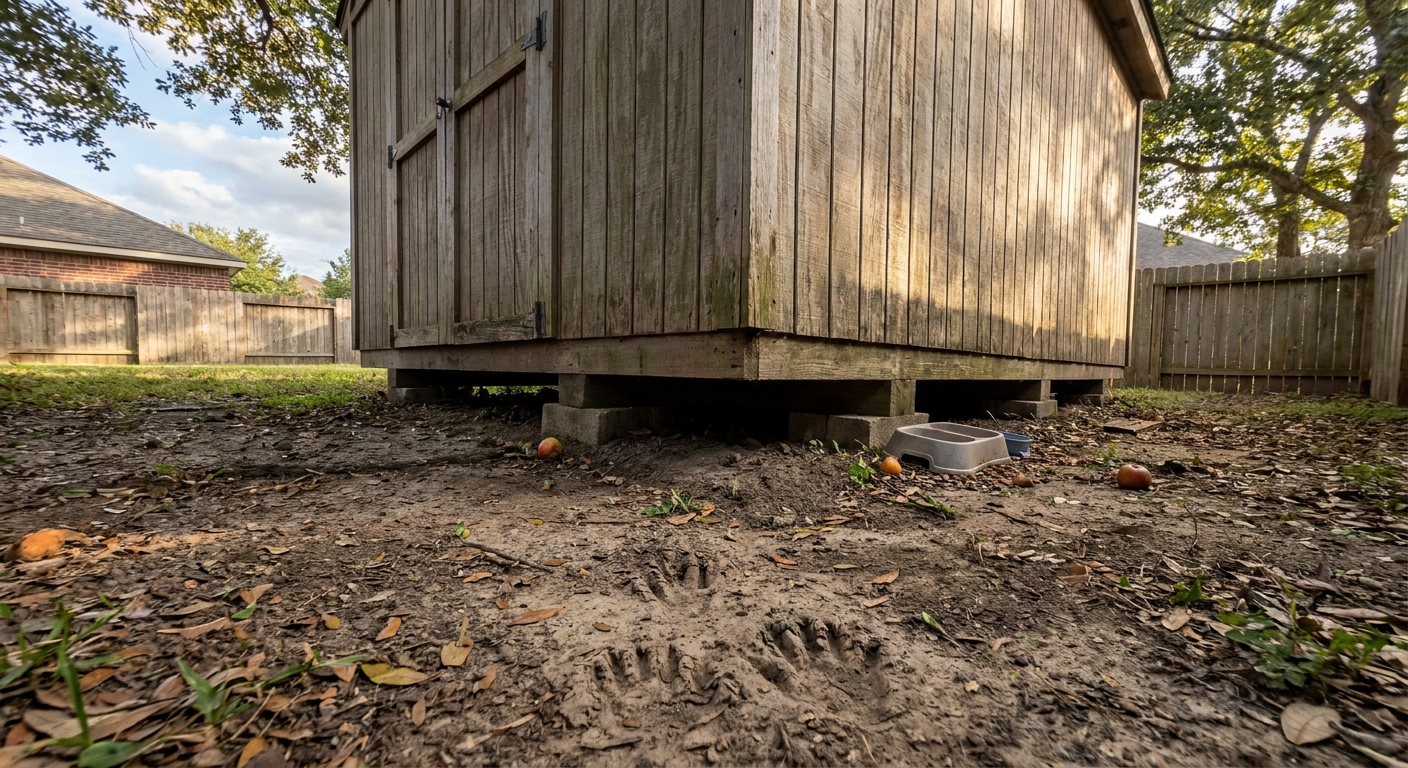
Opossums are sneaky, but they leave clues. You just have to know where to look. Start with the ground around your shed. Check for prints—small, hand-shaped tracks with an opposable thumb on the back foot. Those are a dead giveaway. You might also notice trails through the grass or dirt where they've been coming and going on a regular route.

Droppings are another sign. They're smooth, dark, and usually between one and two inches long. You'll find them near the entrance or along their path. At night, listen for scratching, shuffling, or low rustling sounds coming from underneath. If the soil around your shed looks disturbed, or if you see small holes or gaps that seem bigger than they used to be, that's not erosion—that's entry.

  • Hand-like tracks with visible thumb marks in mud or dirt
  • Smooth droppings near the shed's perimeter
  • Scratching or rustling noises after sundown
  • Disturbed soil or enlarged gaps under the structure
  • A musty smell that wasn't there before

The Problems They Bring

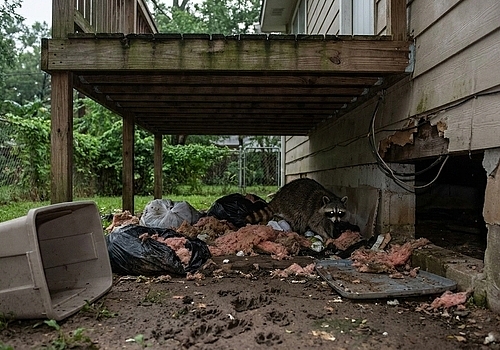
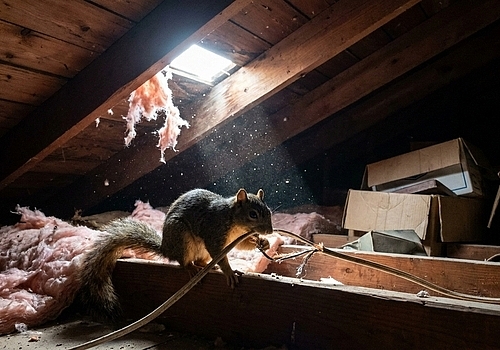
Opossums aren't aggressive. They won't charge you, and they're not looking for a fight. But that doesn't mean you want them setting up camp. Once they're living under your shed, things can go sideways fast. They'll rip up insulation if they can reach it. They'll chew through wiring if it's in their way. And if you've got anything stored underneath or along the edges, expect it to get trampled, soiled, or shredded.

Then there's the mess. Droppings pile up. Nesting material gets dragged in. If one dies under there, the smell alone will drive you out of your own yard. And the longer they stay, the more likely you are to attract other animals—raccoons, feral cats, even rats—who see the activity and figure there's something worth investigating. Professional wildlife removal can help address these concerns before they escalate.

  • Damage to insulation, wiring, or stored items
  • Accumulation of droppings and nesting debris
  • Foul odors that linger and worsen over time
  • Increased risk of attracting secondary pests
  • Potential exposure to bacteria or parasites in waste

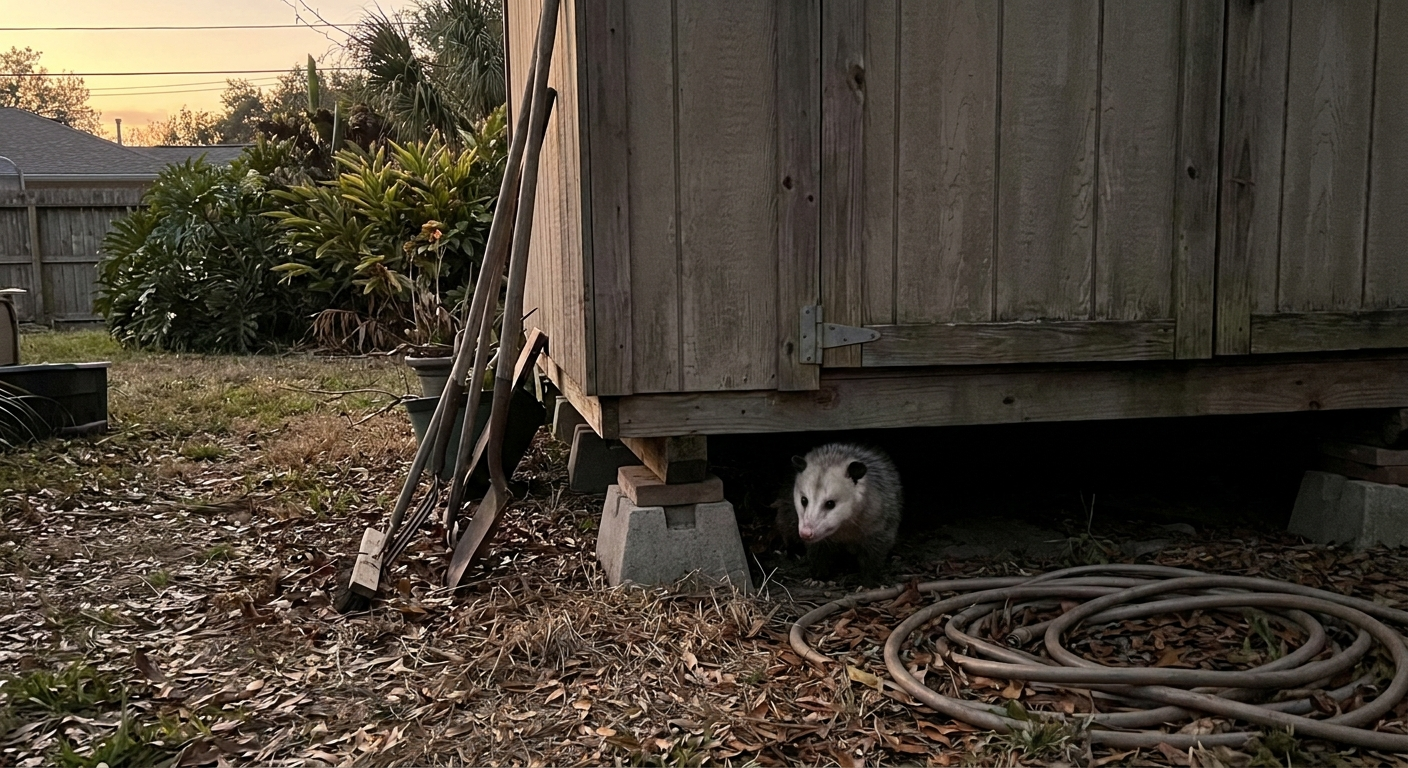
Opossum under Houston shed at night

How to Get Them Out

You can't just ignore this and hope they move along. Opossums are transient, but they're also creatures of habit. If your shed works for them, they'll keep using it until something changes. The first step is making sure you've actually got opossums and not something else. Sprinkle flour or fine dirt near the suspected entry point at dusk. Check it in the morning for tracks. Once you're sure, it's time to act.

Remove the reasons they showed up in the first place. Lock down your trash. Bring pet food inside at night. Pick up fallen fruit. Clean up anything edible or accessible. Then make the space uncomfortable. Bright lights and noise work wonders. Stick a portable radio under the shed and leave it on a talk station overnight. Hang a work light near the entrance. Opossums hate both. Give it a few nights, and they'll usually leave on their own.

  • Confirm the animal by checking for tracks with flour or dirt
  • Secure trash cans and remove outdoor pet food
  • Use bright lights or a radio to disrupt their routine
  • Wait until you're certain they've left before sealing entry points
  • Install wire mesh buried several inches underground to block re-entry

When to Call in Backup

If the opossums don't budge, or if you find babies under there, it's time to bring in a professional. Trying to trap or relocate them yourself can backfire—especially if you're dealing with a mother and young. Licensed wildlife removal experts know how to handle this without causing harm or breaking local regulations. They'll inspect the site, remove the animals safely, and help you seal the area so it doesn't happen again.

We've seen too many homeowners waste time and money trying to DIY this, only to have the problem return a week later. Professionals don't just remove the animal—they fix the root cause. Humane wildlife removal ensures that both animals and property are protected throughout the process. That means better results and fewer headaches down the line.

  • Safe removal without harm to animals or property
  • Inspection of entry points and vulnerable areas
  • Sealing and exclusion work to prevent return
  • Compliance with local wildlife regulations
  • Peace of mind that the job's done right

Seal It or See It Again

Getting the opossums out is only half the job. If you don't seal the entry points, something else will move in. Could be another opossum. Could be a raccoon, a skunk, or a rat. Wildlife doesn't care who was there first—they care about available space. Once you've confirmed the animals are gone, close every gap. Use heavy-duty wire mesh, not chicken wire. Bury it at least six inches down so nothing can dig under. Check the entire perimeter, not just the obvious spots.

This isn't a weekend project you want to half-finish. Do it right the first time, or you'll be doing it again in a month. Proper full home exclusion and entry point sealing ensures long-term protection against re-entry. And if you're not confident in your ability to locate every entry point, hire someone who is. The cost of a proper exclusion is a fraction of what you'll spend dealing with repeated infestations. Critter-proofing your home is an investment that pays off by preventing future wildlife intrusions.

Don't Wait for the Smell

Most people don't take action until the problem becomes obvious. By then, the damage is done. The shed's already been used as a den, the mess is piling up, and the smell is starting to seep into the yard. We've worked with enough homeowners to know that early action saves time, money, and frustration. If you see the signs, move fast. Don't wait for confirmation from your nose. Consider scheduling a free wildlife inspection to assess the situation early and avoid costly repairs down the line.

Opossums aren't going to ruin your life, but they will ruin your shed if you let them. Take control of the situation before it escalates, and you'll save yourself a headache you didn't need in the first place. For immediate assistance, contact us to discuss your options and get expert help.

Let’s Protect Your Shed—Together

We know how quickly a small wildlife problem can turn into a big headache. If you’re ready to reclaim your shed and keep your property safe, let’s tackle it as a team. Give us a call at 832-834-8206 to talk with a local expert, or schedule a free inspection and let’s make sure your shed stays opossum-free for good.


‹ Back

Get Your Free Wildlife Inspection in Houston Today

If you're hearing noises, scratching, seeing damage, or suspect wildlife in your attic or walls, don't wait. We offer fast, honest inspections with real solutions that fix the problem.