



Unusual Movement in Your Attic or Walls? We Handle it the Right Way – PERMANENTLY.

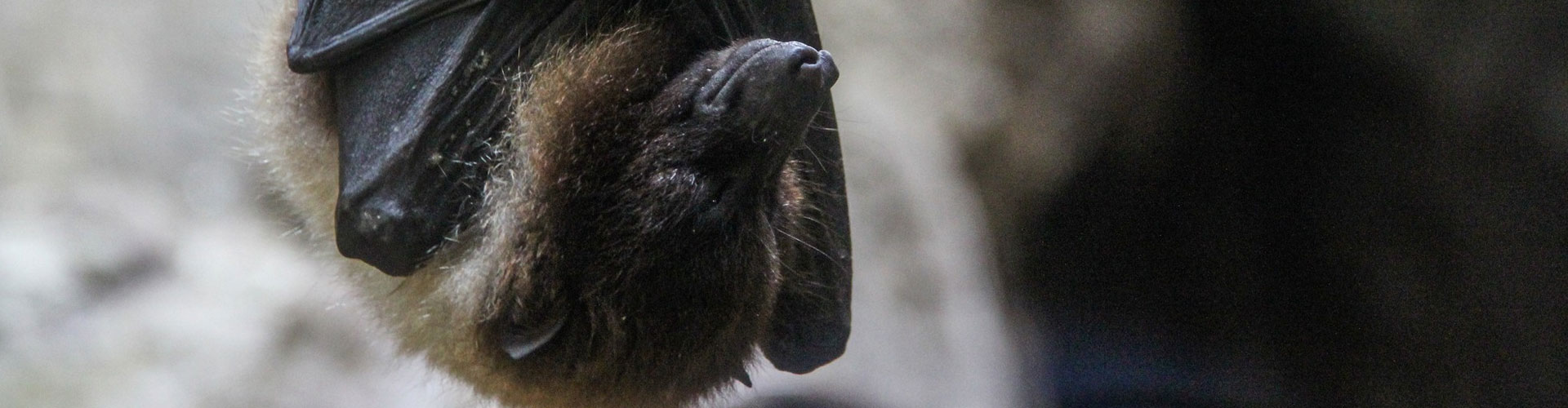
From a tree, a bat is handled by CritterProof through bat removal services.

Found Animal Droppings in Your Houston Attic?

Published August 3rd, 2026 by CritterProof Wildlife Removal

Most homeowners treat attic droppings like a mystery they'd rather not solve. You see the pellets, maybe the streaks, and suddenly your storage space feels contaminated. Houston's climate doesn't help — warm winters and humid summers make our attics prime real estate for rats, raccoons, squirrels, and bats. If you've spotted droppings up there, you're not just dealing with a mess. You're looking at health risks, structural damage, and a wildlife problem that won't fix itself.

Found Animal Droppings in Your Houston Attic?

The truth is, droppings are never just droppings. They're evidence. Every pellet tells you something about the animal's size, diet, and habits. And if you don't act fast, that evidence will multiply. So will the damage. We've seen insulation shredded, wiring chewed, and entire sections of attic space turned into latrines. The longer you wait, the more expensive the cleanup becomes.

Your Attic Checks Every Box

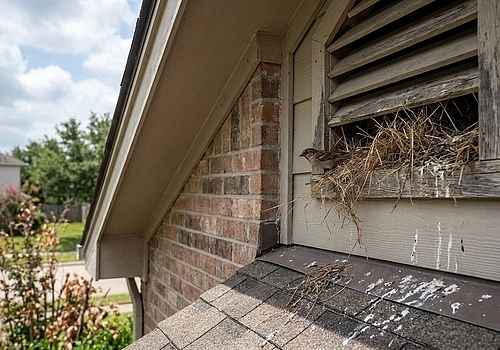
Wildlife doesn't stumble into your attic by accident. They're looking for shelter, and your home delivers. Attics stay dry when it's pouring outside. They're warm during cold snaps. And unless you're storing Christmas decorations, they're undisturbed for months at a time. Houston's urban sprawl pushes animals out of green spaces and into residential neighborhoods, where attics become survival tools.

Rodents squeeze through gaps the size of a quarter. Raccoons pry open vents with their paws. Squirrels chew through wood and shingles like it's nothing. Once they're in, they nest, breed, and leave waste behind. That waste isn't inert — it carries pathogens, attracts insects, and degrades air quality. If you've found droppings, assume the problem is bigger than what you've seen.

What You're Actually Looking At

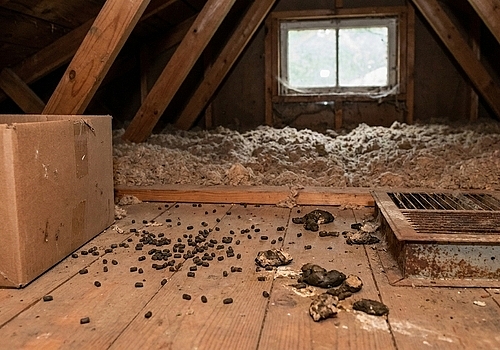
Not all droppings are created equal. Size, shape, and location matter. If you're trying to figure out what's living above your ceiling, start with what's on the floor. Here's what we see most often in Houston attics:

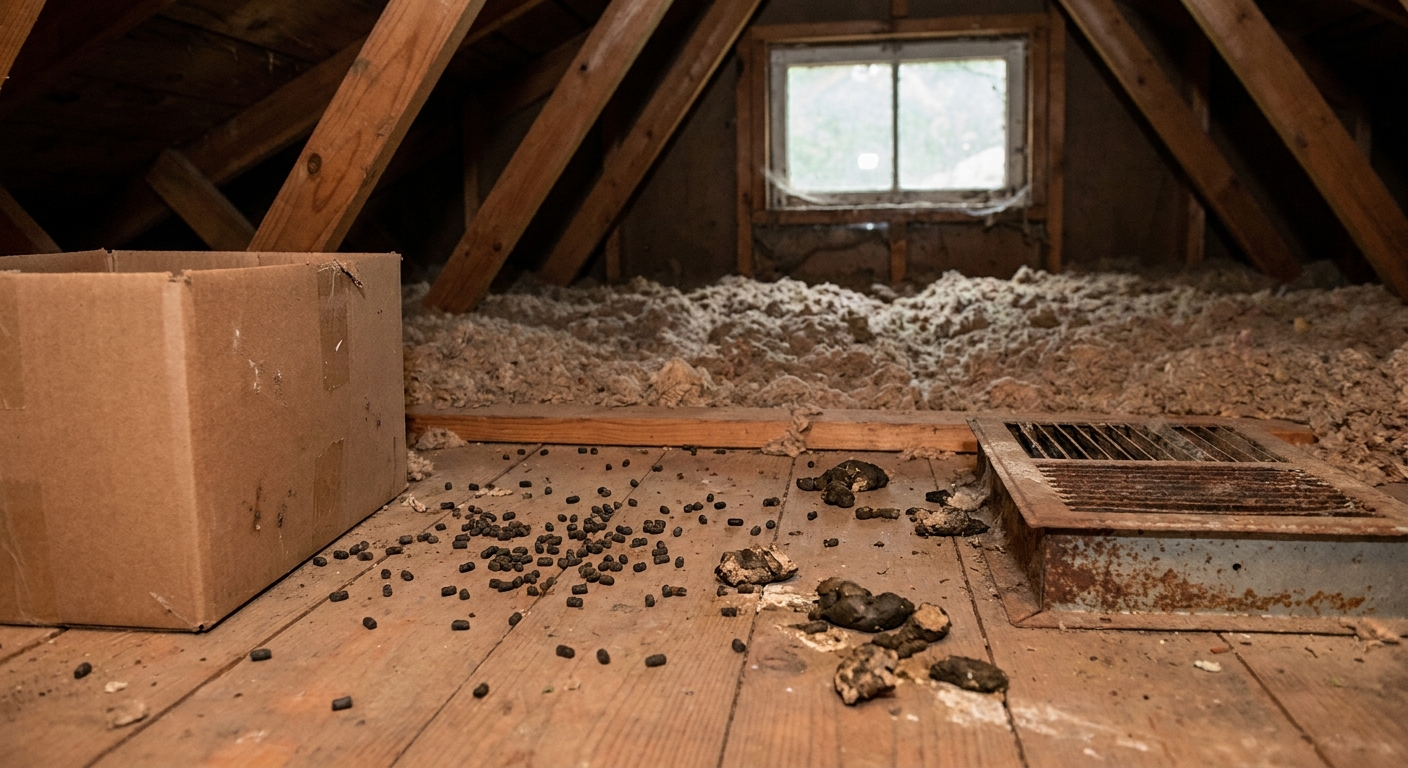
  • Rats and mice: Small, dark pellets shaped like grains of rice or oblong capsules. Mice leave pinpoint droppings; rats leave something closer to raisins. You'll find them along baseboards, near insulation, or scattered in trails.
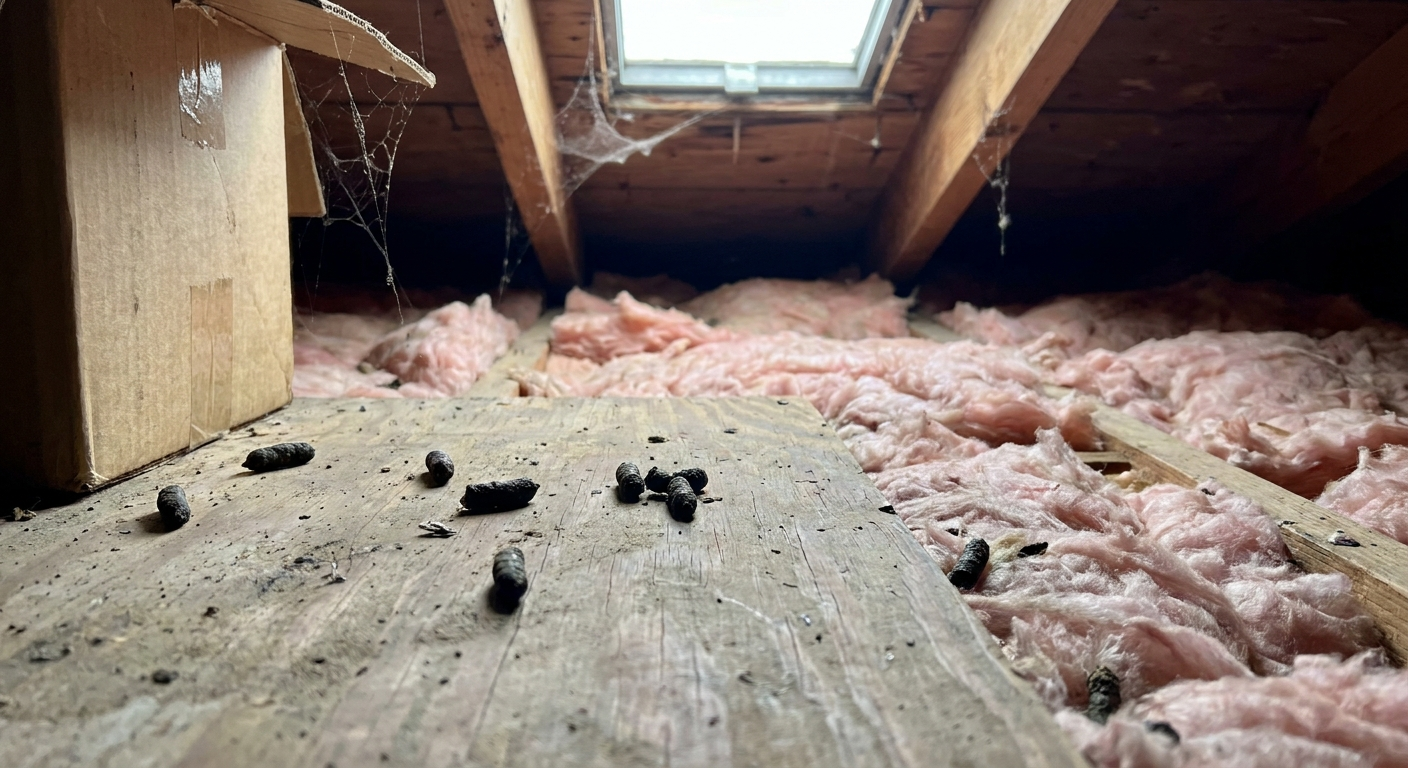
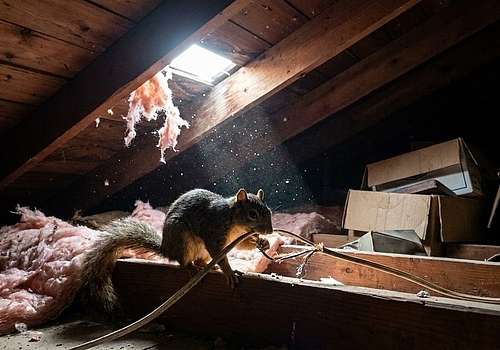
  • Squirrels: Larger than rodent droppings, rounder at the ends, and often clustered near entry points or nests. If you see gnaw marks on wood or wires, squirrel removal is the likely solution.
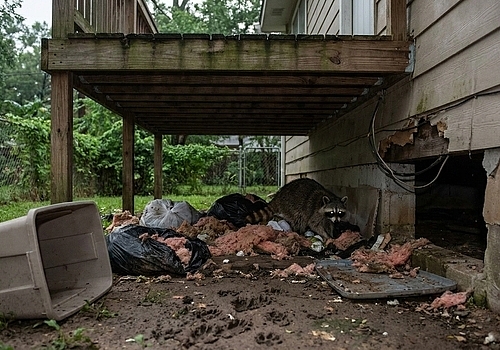
  • Raccoons: These are unmistakable — two to three inches long, cylindrical, and often filled with seeds or berries. Raccoons use latrine sites, so you'll find piles in the same spot repeatedly.
  • Bats: Guano is small, dark, and crumbly, often piled beneath roosting spots. It may shimmer slightly because of insect wings in the waste. If you see guano, you've got a colony.
  • Opossums: Less common but possible. Droppings are smooth, one to two inches long, and may curl at the ends. They're usually found near food sources or nesting areas.

The Risks Aren't Just Cosmetic

Animal waste is biohazardous. Full stop. Rodent droppings carry hantavirus, leptospirosis, and salmonellosis — all of which can make you seriously ill. Raccoon feces may contain roundworm eggs that cause neurological damage if ingested or inhaled. Bat guano harbors histoplasmosis spores, which attack the lungs when disturbed. Even dried droppings release harmful particles when swept or vacuumed.

Beyond disease, droppings attract secondary pests. Beetles, flies, and mites thrive in contaminated attics. If the waste saturates insulation or drywall, you're looking at odor problems, stains, and eventual structural rot. The longer droppings sit, the worse the contamination becomes. We've pulled insulation out of attics where the ammonia smell was so strong it burned our eyes through respirators.

How to Respond Without Making It Worse

If you've found droppings, your first instinct might be to grab a broom and trash bag. Don't. Disturbing waste releases pathogens into the air, and without proper protection, you're breathing them in. Here's the protocol we follow — and what we recommend for homeowners who want to assess the situation safely:

  • Leave the droppings alone: No sweeping, no vacuuming, no touching. If you need to inspect further, wear gloves and an N95 mask at minimum.
  • Identify the animal: Use droppings, entry points, and damage patterns to figure out what you're dealing with. If you're not sure, document what you see and call a professional.
  • Check for active infestation: Look for fresh droppings, gnaw marks, nests, or sounds. If the droppings are dry and dusty, the animal may have left — but that doesn't mean the problem is over.
  • Seal nothing until the animal is gone: Trapping wildlife inside your attic makes everything worse. Removal comes first; exclusion comes second.
  • Hire a wildlife removal team: We trap, remove, clean, disinfect, and seal entry points. DIY cleanup of heavy contamination is risky and often incomplete.

Cleaning Isn't Optional

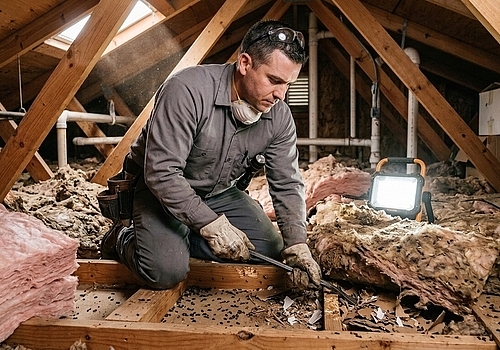
Once the animal is out, the attic needs remediation. That means removing contaminated insulation, disinfecting surfaces, and treating for odor and pathogens. We use hospital-grade disinfectants and HEPA filtration to eliminate biological threats. If insulation is saturated, it gets bagged and replaced. If structural wood is stained or degraded, we assess whether repair or replacement is needed.

Some companies skip this step. They'll trap the animal and call it done. But if droppings are still in the attic, you're still at risk. And if the smell lingers, new animals will follow the scent trail right back in. Full remediation with attic cleanup and sanitation is the only way to break the cycle and restore air quality.

Animal droppings found in a Houston attic indicating wildlife infestation and need for cleanup

Stopping the Next Wave

Wildlife removal without exclusion is a waste of money. We seal every entry point — vents, soffits, roof gaps, pipe chases, and foundation cracks. We install one-way doors on active entry points so animals can leave but not return. We trim branches that overhang the roof and remove attractants like open trash or accessible pet food.

Prevention is about making your attic less inviting. That means:

  • Screening vents and chimneys with heavy-gauge mesh
  • Sealing gaps around utility lines and roof penetrations
  • Trimming tree branches within six feet of your roofline
  • Repairing damaged soffits, fascia, and shingles
  • Inspecting your attic at least twice a year for new signs of entry

When DIY Isn't the Play

Small mouse problems? Maybe you can handle it with traps and cleanup. But if you're dealing with rats, raccoons, squirrels, or bats, the risks escalate fast. Bats are protected in Texas during maternity season, so removal has to follow state law. Raccoons are aggressive when cornered, and their waste is dangerous. Squirrels chew through traps and can cause electrical fires.

We bring the gear, the training, and the licenses. We know how to trap without injuring the animal or violating wildlife codes. We know how to clean without spreading contamination. And we know how to seal an attic so it stays secure for the long haul. If you're unsure whether you need help, the answer is probably yes.

What Happens If You Ignore It

Some homeowners see droppings and hope the problem resolves itself. It won't. Animals don't leave on their own unless food, water, or shelter runs out — and your attic offers all three. The longer they stay, the more they reproduce. One pair of mice can produce dozens of offspring in a single season. One raccoon can tear through insulation, wiring, and ductwork in weeks.

The financial cost adds up. Contaminated insulation runs hundreds to thousands of dollars to replace. Electrical repairs can hit four figures. And if the infestation spreads to living spaces, you're looking at remediation that affects walls, ceilings, and HVAC systems. We've seen homeowners spend five figures fixing damage that started with a few droppings they ignored for six months.

Droppings Are the Warning Shot

Finding waste in your attic isn't the start of a problem — it's the middle. The animal has already been there long enough to eat, nest, and leave evidence. The question now is how much damage has been done and whether more animals are on the way. We can answer both of those questions in one attic inspection, and we can fix the problem before it costs you more than it has to. If you're in Houston and you've found droppings, don't wait for the smell or the noise. Call now, and we'll handle the rest.

Let's Restore Your Peace of Mind

We know how unsettling it is to discover animal droppings in your attic, but you don’t have to face it alone. Our team is ready to help you reclaim your home, eliminate health risks, and prevent future invasions. Give us a call at 832-834-8206 to talk through your situation, or schedule a free inspection and let’s get your attic back to safe, clean, and critter-free—starting today.


‹ Back

Get Your Free Wildlife Inspection in Houston Today

If you're hearing noises, scratching, seeing damage, or suspect wildlife in your attic or walls, don't wait. We offer fast, honest inspections with real solutions that fix the problem.